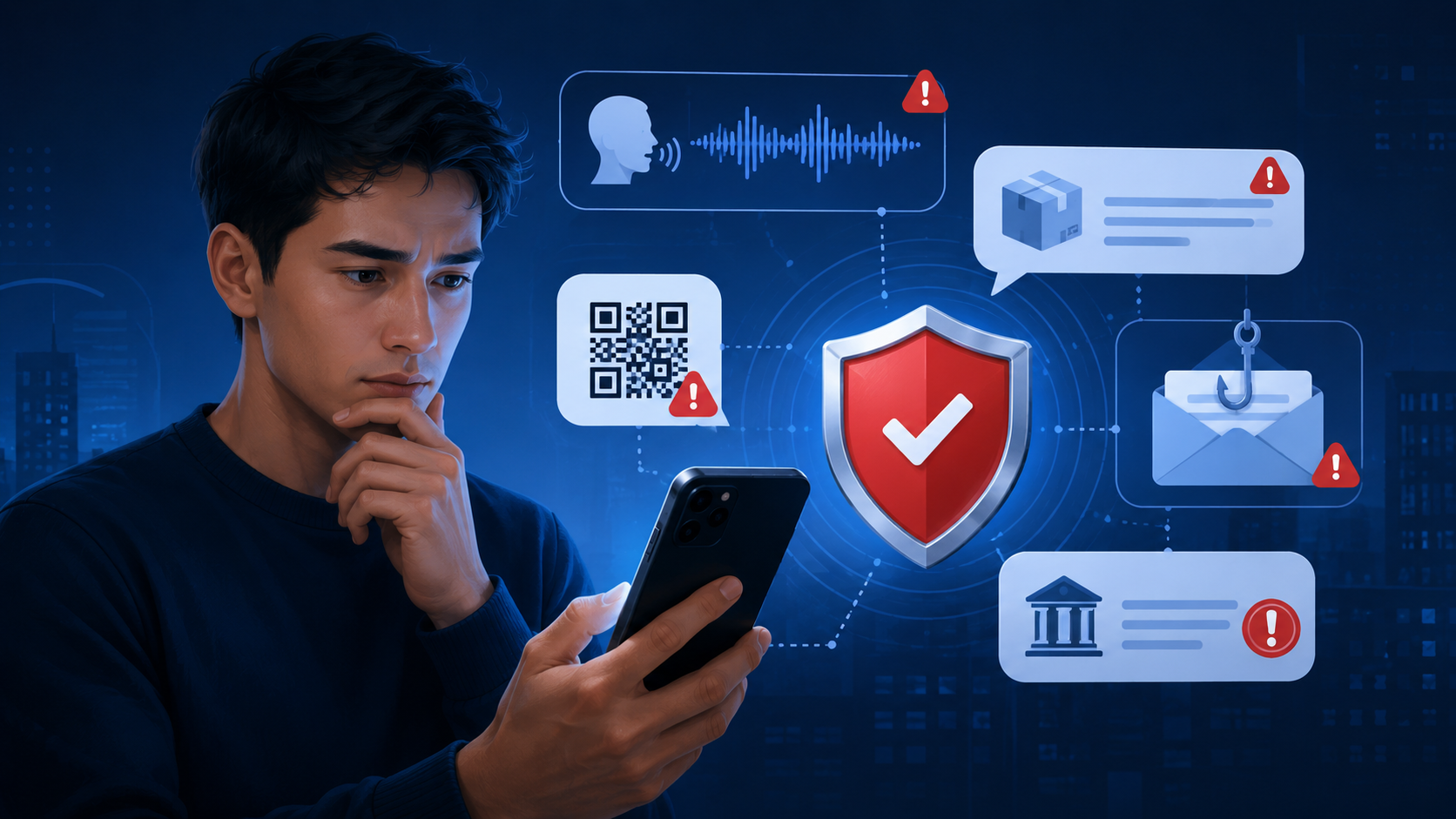
AI Scams Are Getting Smarter, Here’s How to Protect Yourself in 2026
Scams are no longer easy to spot.
Earlier, a fake message had spelling mistakes, poor grammar, or a strange-looking link. Today, scammers use AI tools, realistic voice cloning, professional-looking websites, fake customer support pages, and urgent text messages that look completely believable.
This is why many people get trapped even when they are careful.
The biggest mistake people make is thinking, “I am smart, I will not fall for scams.” That confidence is dangerous. Modern scams are designed to create panic, urgency, greed, fear, or trust within seconds. Once your emotions take over, your judgment becomes weak.
This guide explains the most common AI-assisted scams people should watch for in 2026 and the simple habits that can protect you and your family.
1. AI Voice Cloning Scams
One of the most dangerous scams today is AI voice cloning.
A scammer may call you and make it sound like your son, daughter, friend, spouse, or relative is in trouble. The voice may cry, panic, or say something like:
“I had an accident.”
“I lost my phone.”
“Please send money quickly.”
“Don’t tell anyone.”
“I am in trouble with the police.”
The voice can sound real because scammers may use short audio clips from social media videos, WhatsApp voice notes, reels, or public posts.
How to protect yourself
Create a family safety code word.
This should be a private word or phrase that only your close family knows. If someone calls claiming to be a family member in an emergency, ask for the code word.
Also, never send money during the first call. Hang up and call the person directly using the number already saved in your phone. Do not call back the number from the suspicious call.
A real emergency can wait two minutes for verification. A scammer cannot.
2. Fake Delivery and Courier Text Messages
Fake delivery messages are extremely common because almost everyone orders something online.
You may receive a message saying:
“Your package is delayed.”
“Update your address.”
“Pay ₹10 delivery fee.”
“Your parcel will be returned today.”
“Click here to reschedule delivery.”
The link may open a page that looks like a real courier company, but it is fake. It may ask for your card details, OTP, UPI PIN, address, or login information.
How to protect yourself
Never click delivery links from random SMS messages.
Instead, open the official shopping app or courier website manually. If you ordered from Amazon, Flipkart, Meesho, Myntra, or any other store, check the order inside the app.
A genuine delivery company does not need your banking password, UPI PIN, or full card details to “confirm” delivery.
3. QR Code Scams
QR codes are convenient, but they are also risky because you cannot see the final destination before scanning.
Scammers can place fake QR codes on posters, parking meters, restaurant tables, fake invoices, unexpected parcels, or emails. When you scan the code, it may open a fake payment page, phishing website, or malware download.
Some scams are even more dangerous because the QR code does not ask you to receive money, it tricks you into sending money.
How to protect yourself
Before scanning any QR code, ask yourself:
Where did this QR code come from?
Is it printed officially or pasted over another sticker?
Is it asking me to pay urgently?
Is the website address correct?
Is it asking for personal or banking information?
For payments, check the receiver name carefully before confirming. If the name does not match the business or person you expect, cancel the transaction.
Important rule: You never need to scan a QR code to receive money. In most payment scams, scanning and entering your PIN means you are sending money, not receiving it.
4. Fake Bank and UPI Alert Messages
Bank scams usually create fear.
You may get a message saying:
“Your account will be blocked.”
“Your KYC is expired.”
“Your UPI will be suspended.”
“Unusual login detected.”
“Verify your account now.”
The message may include a link or phone number. If you click or call, the scammer may ask you to install a remote access app, share OTP, enter card details, or provide your UPI PIN.
How to protect yourself
Banks do not ask for OTP, ATM PIN, UPI PIN, CVV, or net banking password on calls or messages.
If you receive a scary bank alert, do not click the link. Open your banking app directly or call the official number printed on your debit card or bank website.
Never install screen-sharing or remote-control apps for anyone claiming to be from a bank.
5. AI-Generated Fake Websites and Ads
Scammers now use AI to create professional-looking websites quickly. These fake sites may sell products, offer loans, promote investment schemes, or pretend to be government portals.
They may have:
Clean design
Fake customer reviews
Fake trust badges
AI-generated product images
Limited-time offers
Countdown timers
Copied brand logos
The website may look better than a real small business website, which makes it more dangerous.
How to protect yourself
Before buying from an unknown website, check:
Does the website have a real contact address?
Does the phone number work?
Is the return policy clear?
Are prices unrealistically low?
Does the domain name look strange?
Are there independent reviews outside the website?
Is payment only accepted through unusual methods?
If a product price looks too good to be true, it is usually bait.
6. Fake Job and Work-from-Home Scams
Work-from-home scams are increasing because many people want quick income.
A fake recruiter may offer you a simple job like liking videos, rating products, typing data, reviewing hotels, or completing small tasks. At first, they may even pay a small amount to build trust.
Then they ask you to deposit money to unlock bigger tasks, upgrade your account, or withdraw your earnings.
That is the trap.
How to protect yourself
Real employers pay you. They do not ask you to pay first.
Be careful if the job has:
No interview
No company email
No proper contract
Very high income for simple work
Pressure to deposit money
Telegram or WhatsApp-only communication
Crypto or prepaid payment requests
If a job asks you to pay to receive work, walk away.
7. Investment and Crypto Scams
Investment scams are powerful because they target greed and hope.
Scammers may show fake dashboards with profits increasing every day. They may claim:
“Guaranteed returns.”
“Double your money.”
“AI trading bot.”
“Crypto mining income.”
“Secret investment group.”
“Limited seats only.”
At first, they may allow a small withdrawal. That builds trust. Later, when you deposit a larger amount, they block withdrawals and ask for tax, verification fees, or upgrade charges.
How to protect yourself
No genuine investment gives guaranteed high returns without risk.
Before investing, check whether the company is registered with the proper financial regulator in your country. Avoid investment advice from random Telegram groups, WhatsApp groups, Instagram pages, dating apps, and strangers online.
If someone pressures you to act fast, that is not an opportunity. That is a warning sign.
8. The 10-Second Pause Rule
Most scams work because people react too fast.
So use this rule:
Pause for 10 seconds before clicking, paying, scanning, sharing, or replying.
During that pause, ask:
Why am I being rushed?
Who is asking me?
Can I verify this another way?
What happens if I wait?
Am I being asked for money, OTP, PIN, or personal details?
This small pause can save you from a big loss.
9. What to Do If You Think You Were Scammed
If you already clicked a suspicious link or shared details, act quickly.
Change your passwords immediately.
Block your card if payment details were shared.
Contact your bank if money was deducted.
Turn off internet access if you installed a suspicious app.
Uninstall unknown apps.
Report the scam to the proper cybercrime authority in your country.
Warn family members if your WhatsApp, email, or social account was compromised.
Do not feel ashamed. Scams are designed to fool normal people. The correct response is fast action, not silence.
Final Thoughts
Online safety in 2026 is not about being afraid of technology. It is about slowing down and verifying before trusting.
AI will make scams look more real, sound more real, and feel more urgent. That means your safety habits must also improve.
Remember these three rules:
Never trust urgency.
Never share OTP, PIN, or passwords.
Always verify through a second trusted channel.
A few seconds of checking can protect your money, identity, and family.
Reader Discussion
Comments
Comments are reviewed before appearing publicly.Reader comments